
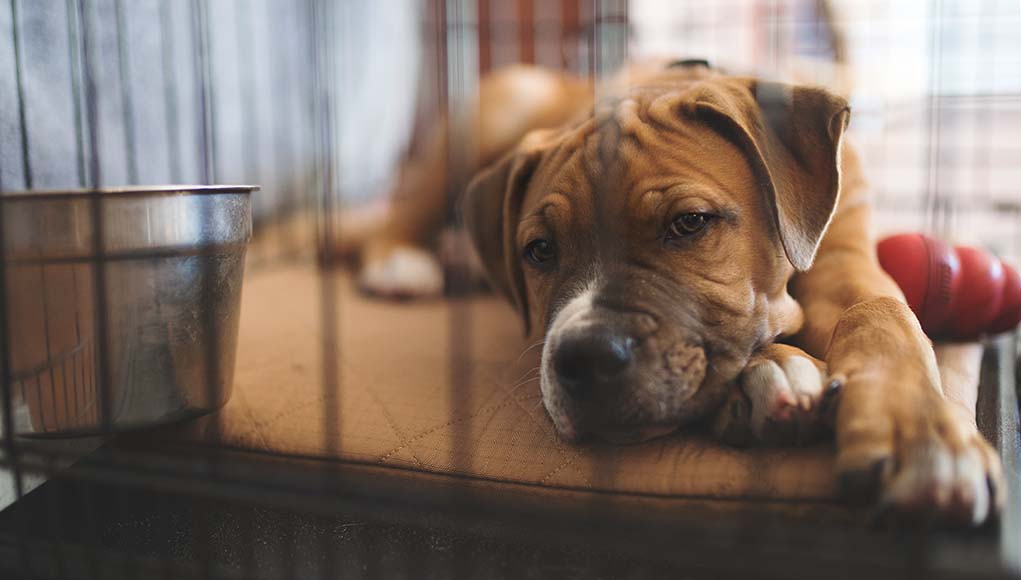
What is crate training? It’s the process of helping your dog learn to spend time in their crate—and ultimately, to adopt it as their own personal space in your home. Crate training taps into your pup’s natural inclination to keep their sleeping space clean—they’re less likely to go potty where they hang out and sleep. Using a crate has benefits beyond just potty training, too; it also helps to keep your dog safe and out of mischief when you’re not around to supervise them, plus it provides a comfy retreat when household hubbub gets overwhelming and your pup wants to relax.
But there’s more to crate training a dog than simply putting them in the crate and closing the door. Dogs need to gradually adjust to spending time in their crates, with lots of positive encouragement from you. Rush the process, and you’ll risk causing your pup stress and anxiety, which can create negative associations with the crate that can be difficult to overcome.
So how do you crate train a dog, and what do you need to know to get started? We’ve got your complete guide to crate training a dog.
The Benefits of Crate Training a Dog
Your dog’s crate might look like a basic enclosure to you, but if you use it correctly, it’ll become one of your pup’s favorite places to be—aside from your lap, of course. Here’s how crates can help both you and your dog:
- Giving your dog a space of their own: Picking an appropriately sized crate and taking time to gradually introduce your dog to it will help them consider the space a comfy refuge. Dogs typically prefer protected areas when bedding down, so a crate can tap into that natural inclination to rest in a safe space.
- Encouraging potty training: One of the biggest benefits to crate training is that it helps streamline the housetraining process, since most pups won’t soil where they sleep. When you learn how to crate train a puppy, for example, you’re also learning a key step in their potty training process—two birds, one stone.
- Keeping your pup (and your stuff) safe: Successful dog raising is all about supervision, especially when they’re puppies. But the reality is that most pet parents can’t watch their pup full-time. Once again, crate training saves the day! Left to their own devices, most puppies will chew anything they can get their teeth on, but a crate helps to keep your curious pup safely apart from your things (and vice versa) when you’re not able to keep an eye on them.
- Providing a Recovery Zone: At some point in your dog’s life, you may need to restrict their movement due to an injury or medical procedure. Making sure that they’re happy in their crate will make that job much easier.
Some pet parents worry that “locking their dog up” in a crate could be cruel, but the reality is far different. Yes, it’s true that one benefit of crates is that they keep your dog contained (and out of mischief). But when used properly, your dog’s crate won’t feel like a cage. In fact, it’ll feel just like home! The trick is to introduce the crate gradually, without rushing your dog to adjust to it before you leave them in it alone. Let them settle into the crate on their own terms, and your pup will repay you with calm and happy crate time for years to come.
Supplies Needed for Crate Training a Dog
If you want your dog’s crate to become their happy place, you’ve got to make sure it’s just right for them. Here’s what you’ll need:
The Right Crate
Once you start to look at crates you will find there are lots of options. Choosing the right crate for your own pup isn’t difficult once you consider a couple things:
- Type
- Size
First up is the type of crate, which can fall into two categories: either hard plastic airline-style crates, like the Frisco Two Door Top Load Plastic Dog & Cat Kennel, or wire crates like the Frisco Heavy Duty Fold & Carry Single Door Collapsible Wire Dog Crate. Most pups can learn to be comfortable in either type, but wire crates have more versatility when it comes to door placement and customizing the size of the interior with a divider.
Next, you’ll need to pick the correct size—one of the most important considerations when figuring out how to crate train a dog. Your dog crate should be large enough so that your dog can stand up, turn around and lie down comfortably, but not much bigger. Although it’s tempting to purchase an oversized crate to give your pup more room, doing so can derail the potty-training process by giving your pup the space to go to the bathroom at one end while staying dry in the other.
Pet parents of puppies, especially large breed puppies, can anticipate their dog’s growth by purchasing the largest sized crate their dog will need when they’re fully grown and using an adjustable crate divider to keep the available space inside the right size.
Other Crate Training Supplies
There’s more to crate training than just a crate. Here’s what else you’ll need:
- Bedding: You’ll need bedding to keep your dog comfortable, but if you’re crate training a puppy or an older dog who still needs housetraining, avoid extra-plush dog beds. The extra cushioning might absorb urine and make it difficult to tell if your dog has had an accident inside. Some puppies may be tempted to chew up or destroy overstuffed bedding when left in the crate, too.
- Treats: Tasty snacks are an important part of the crate introduction process (and any other type of training you want to do with your pup).
- Toys: For dogs with tons of energy, like puppies, helping them chill out in the crate can be a challenge. That’s where busy toys come into the picture. Giving your pup something to do when left alone inside can help keep them focused and happy until they drift off to sleep.
How to Crate Train a Dog: Step by Step
One of the secrets to kennel training success is giving your dog plenty of time to feel comfortable inside the crate before closing the door and leaving them alone for the first time. The goal is for your pup to have a positive association with being inside, so that the crate feels like a safe and comfortable resting spot—and you can’t rush that feeling. So remember: The steps below aren’t meant to be done all in one day. Spend as much time as you need on each step to ensure that your dog feels content and stress-free. That’s how you lay the foundation for a lifetime of looking forward to their crate.
Ready to dive into crate training? Here’s how it’s done.
Step 1. Introduce the Crate
Start off the crate training process by keeping the crate door open and letting your pup explore it at their own pace. Toss a treat inside and praise your dog when they go in to eat it, then give them another while they’re in the crate. You can also entice your dog with a busy toy stuffed with treats—anything to make that crate as appealing as possible! Stay happy and upbeat as your puppy explores the crate, making sure to give lots of praise when they go inside. At this stage, keep the door open.
Practice this step as many times as necessary for your dog to get comfortable in the crate. At this stage, the choice to go into the crate is up to your pup. Don’t force them if they seem reluctant. If your dog is hesitant to go inside, you can give treats to reward baby steps in the right direction, like if they glance at it or take a step towards it. These small successes will encourage your pup to keep it up! If they don’t get close to it, simply leave the treats inside for them to collect when they’re ready.
Step 2. Practice Closing the Door
Once your pup has made a positive association to going into the crate, they’ll be ready for slightly longer sessions inside. First, have a play session with your dog and take them outside for a potty break—that’ll help them settle down when it’s crate time. Then, provide a lightly stuffed busy toy for them to enjoy inside the crate. Stay nearby as they enjoy the goodies, and experiment with closing the door while your pup is enjoying the toys and treats inside. Let your dog out right after they finish the treats, or at any barking, whimpering or pawing at the crate that might indicate they want to come out. Again, keep at this step until your dog seems relaxed and shows no signs of stress inside the crate.
Step 3. Step Away Briefly
In subsequent closed-door sessions, try leaving the room once your dog is focused on the toy. Listen at the door for whines or barks that tell you your pup is ready to come out. But at this stage, your dog may surprise you by settling into the crate easily. In fact, if you time your play session, potty break and crate time properly, you might just return to discover a napping pup in the crate!
Step 4. Work Up to Longer Stays
If your dog is OK with you stepping away briefly, try leaving for increasing amounts of time: one minute, then five minutes, then 10. If your pup remains content inside, try leaving the house for a short period of time. You can use a pet camera to check in on them while you’re away.
